kami vs. kita
What is the difference between the Malay pronouns KAMI and KITA? A short explanation and some visual aids are all you need to understand and start using these words.


Both are plural pronouns.
Kita and kami both indicate 2 or more people.
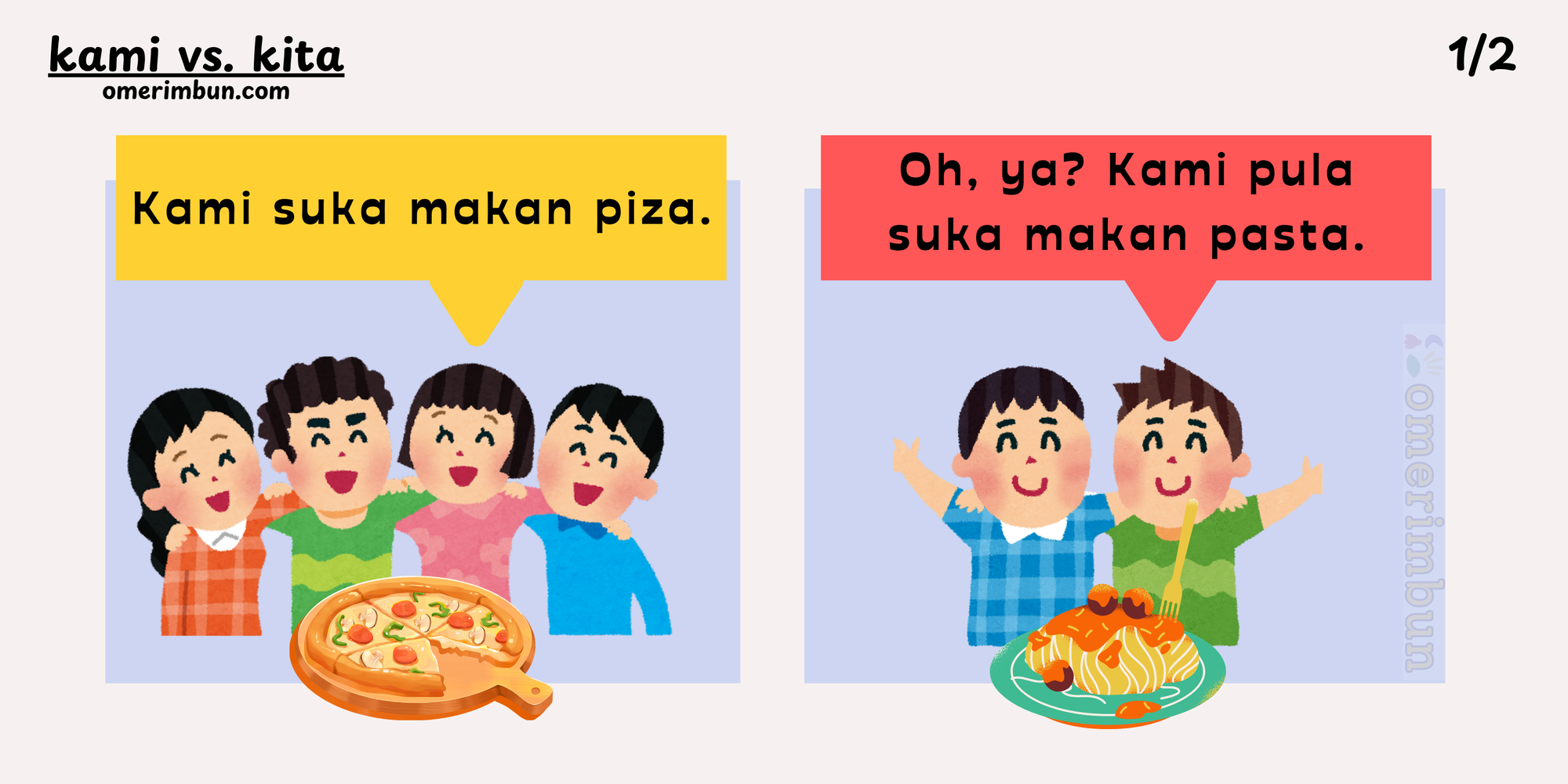
kami
However, when I say kami, I exclude you, the reader or the listener. For example:
🧑🏫 Kami berharap artikel ini berguna untuk orang yang belajar bahasa Melayu.
🧑🏫 We hope this article is useful for people who are learning Malay.
In this sentence, kami refers to me and the writers of this website. You and other Malay learners are not included in the pronoun.
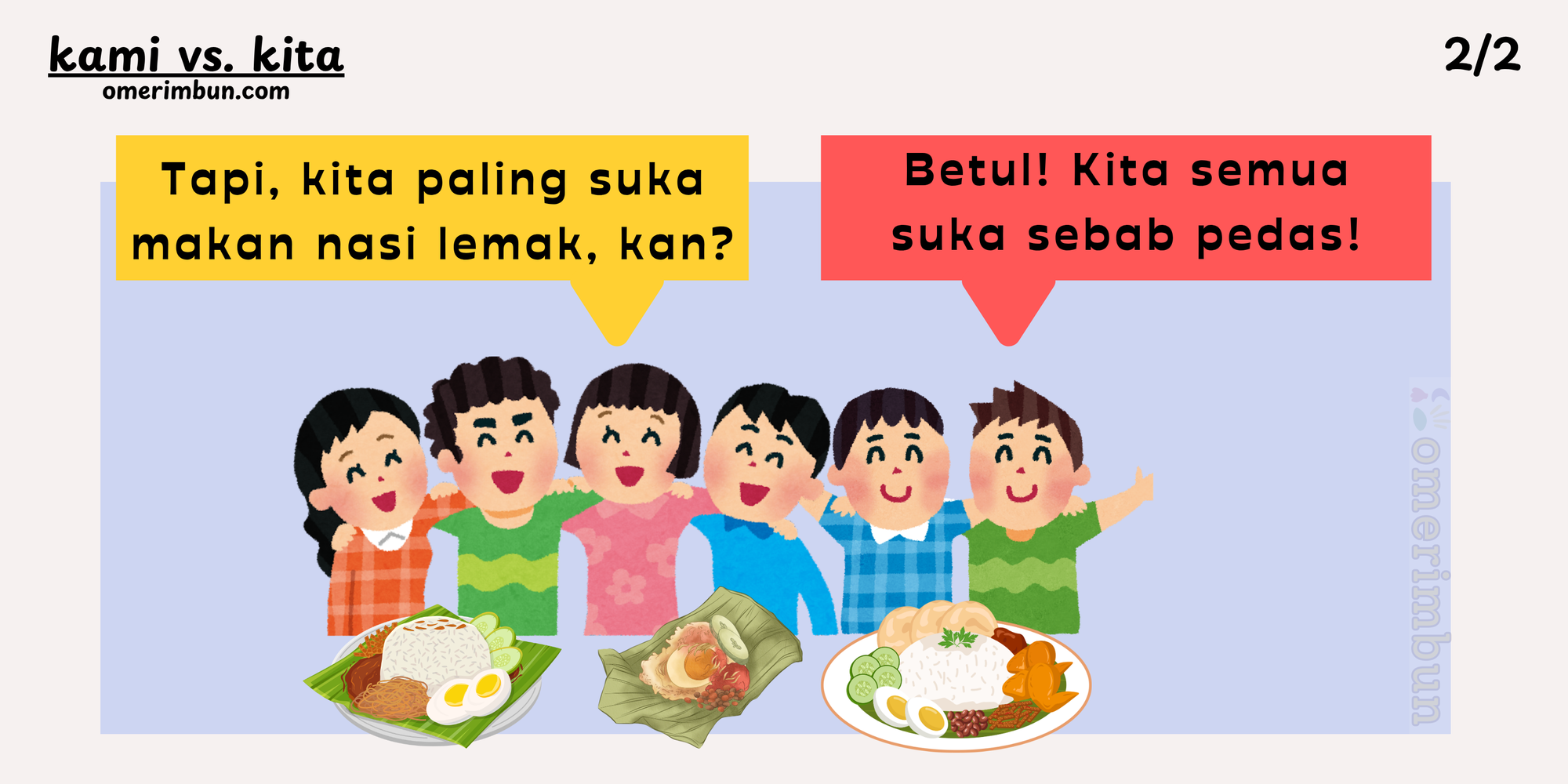
kita
Meanwhile, when I say kita, I include you. For example:
🗣️ Kalau hendak belajar bahasa baharu, kita juga mesti berlatih bercakap dengan orang.
🗣️ If we want to learn a new language, we also have to practise speaking with people.
Kita here refers to me, you, and all language learners in general.
As you can see, kami is smaller in number while kita is for a bigger group of people.
See the difference here:
Basically...
The difference is whether the listener is included or excluded by the speaker.
Some exceptions ⏬
Singular kita
There are situations where one person would use kita to replace the first person pronoun saya. This phenomenon is common amongst kids in Kuala Lumpur when conversing with each other. For example:
Amira:😁 Awak nak main lompat tali, tak? Jom main dengan saya!
Jalil:😨 Tak nak! Kita takut jatuh!
Amira: 😁 Do you want to jump rope? Play with me!
Jalil: 😨 No! I am scared I'd fall!
In this conversation Jalil is using kita, but he is only referring to himself. He is the only one who's scared to fall and doesn't want to jump rope. His sentence excludes Amira. She has no fear jumping rope.
When kids do this, it sounds adorable and more polite than aku, another first person pronoun. I'd say the singular kita is similar in tone to saya.
This function of kita is also used by adults when trying to be friendly and to joke around, or even to sound sarcastic. But I advise against using the singular kita in very professional or formal settings such as when presenting at a conference, giving a speech or talking to customer service agents.
Of course it all depends on the intention and context. I rarely hear adults around me use kita like kids unless it's to add a certain tone or twist to the meaning of what they're saying.
Singular kami
Kami is often used to mean "I/me" by people in the northern states of peninsular Malaysia, namely Kedah, Perlis and Pulau Pinang and the surrounding area. The usage of singular kami is more neutral in tone and is just a linguistic feature in the region. So, instead of saya or aku, the singular kami is meant to sound more friendly and does not have any child-like tone even when it's used by adults.
If you ever get confused with these plural pronouns in Malay, just ask other Malay speakers what they actually mean, and you will slowly get used to the quirks of these two words. Good luck! 😸